



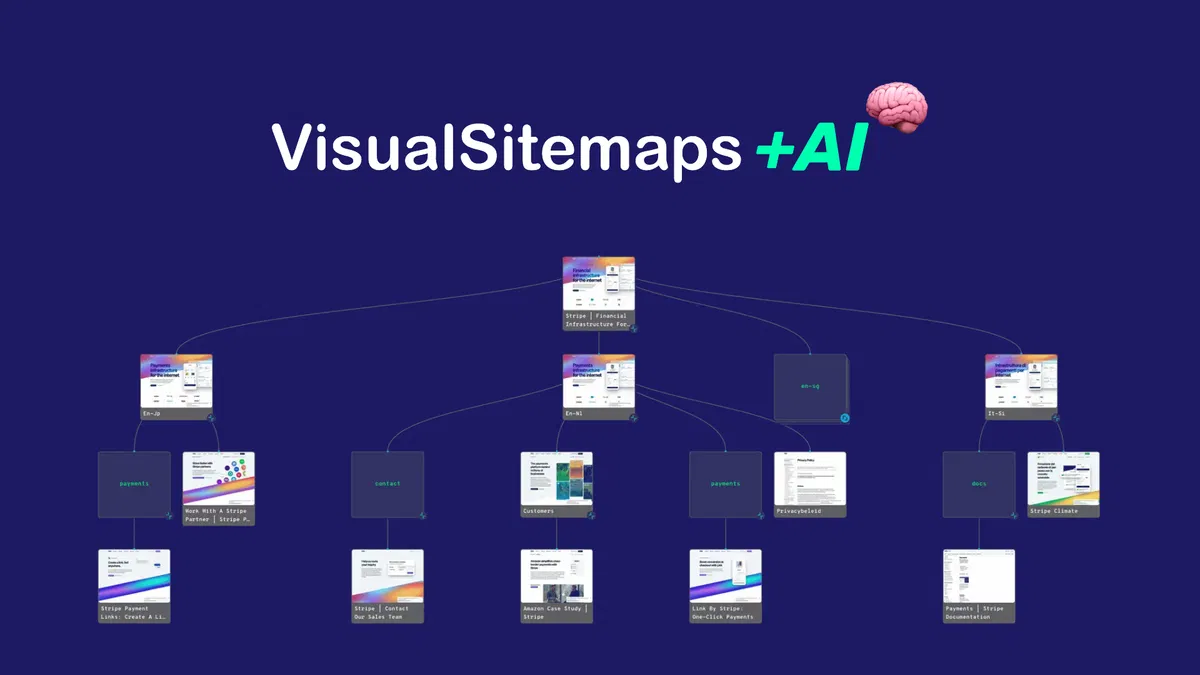
Description
VisualSitemaps: Use AI to crawl, visualize, and analyze your website architecture, so you can make smarter decisions.
When your website is filled with a maze of countless pages, it becomes difficult to grow your business. Visual sitemaps use AI visual maps to understand and improve your website architecture.
Visualize and optimize website architecture using AI-powered maps that reveal what to keep, merge, remove, or build next. Analyze site structure to uncover SEO and UX gaps, reduce bloat, and scale with clearer, smarter decisions.
What is the use of a visual sitemap?
- Understand the entire website structure at a glance
- Plan UI/UX design
- Conduct SEO audits and page coverage tests
- Explain website flow to clients
- Understand which page links to which
Optimize your website architecture using AI. | VisualSitemaps
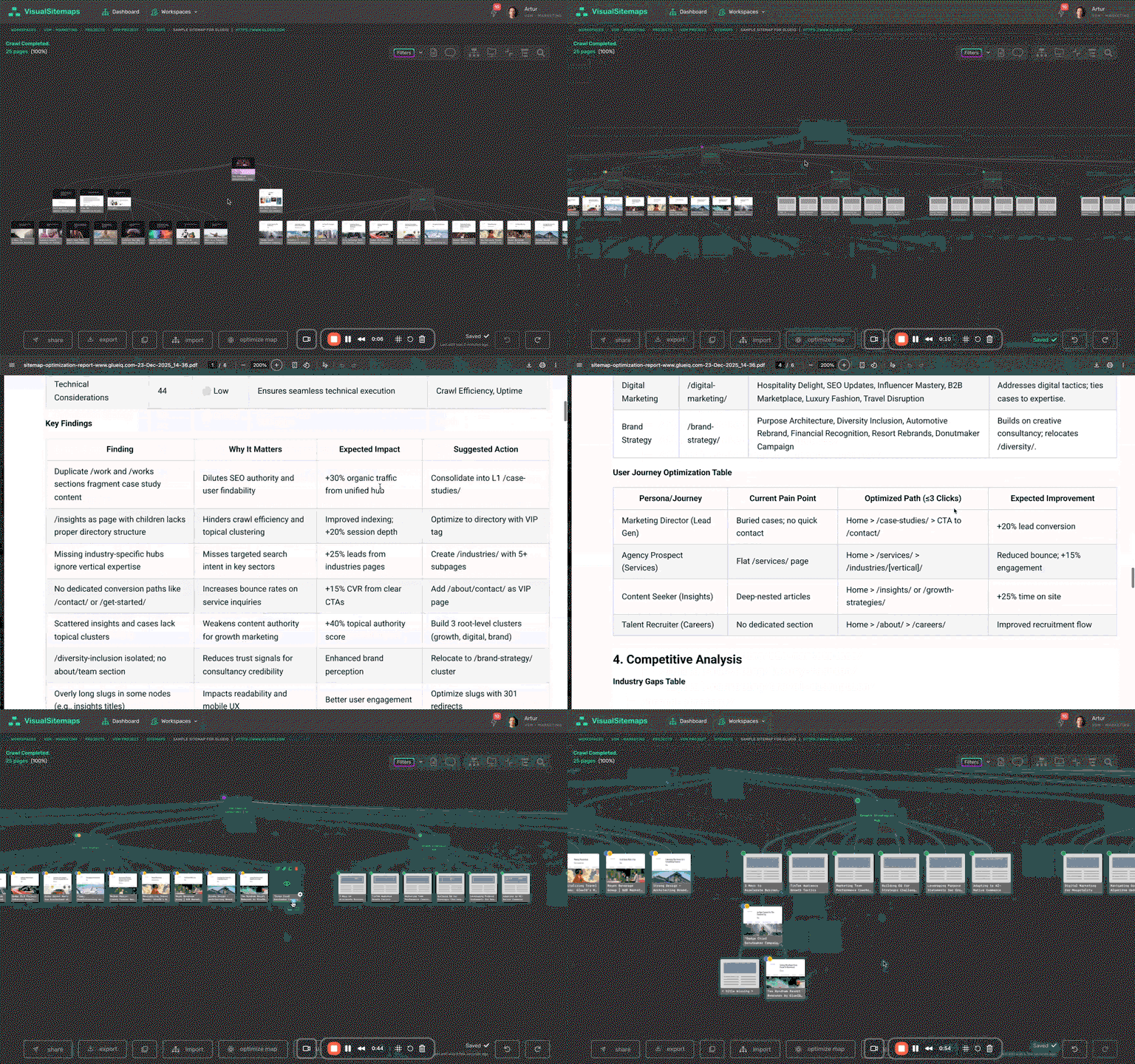
Automatically analyze your site to identify weak IA/UX structures, missed SEO opportunities, and poorly performing pages by crawling every page.Use AI to reorganize and reveal where hierarchy and content are breaking.Get actionable recommendations to prioritize strategic fixes.
Increase team collaboration | VisualSitemaps
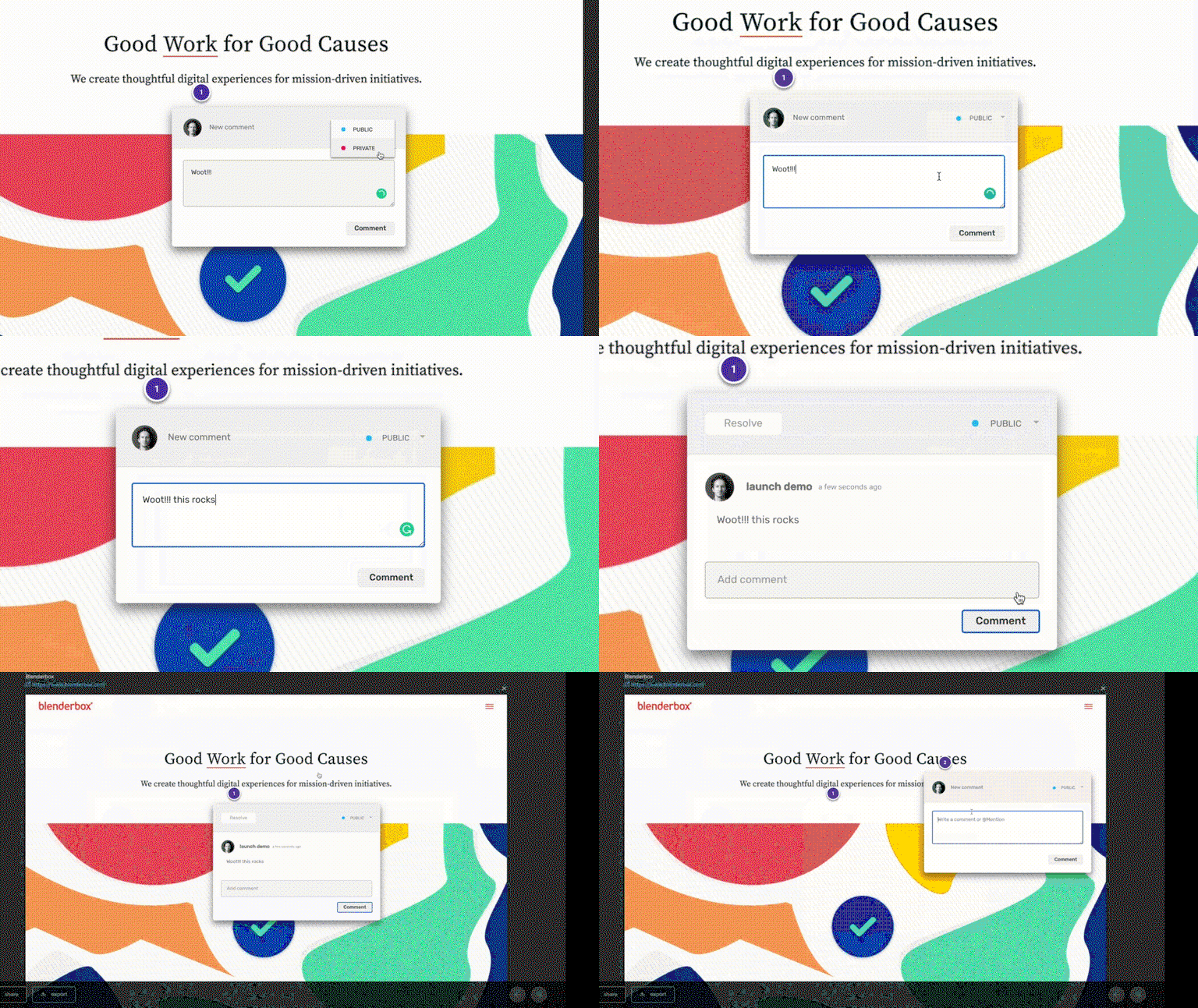
Create shareable reports in .pdf, .md, and .csv formats that summarize structural issues and optimization opportunities.Export visual sitemaps and analytics in formats that work across stakeholders.Align teams on decisions and next steps, while reducing back-and-forth.
Stay ahead of your competitors | VisualSitemaps
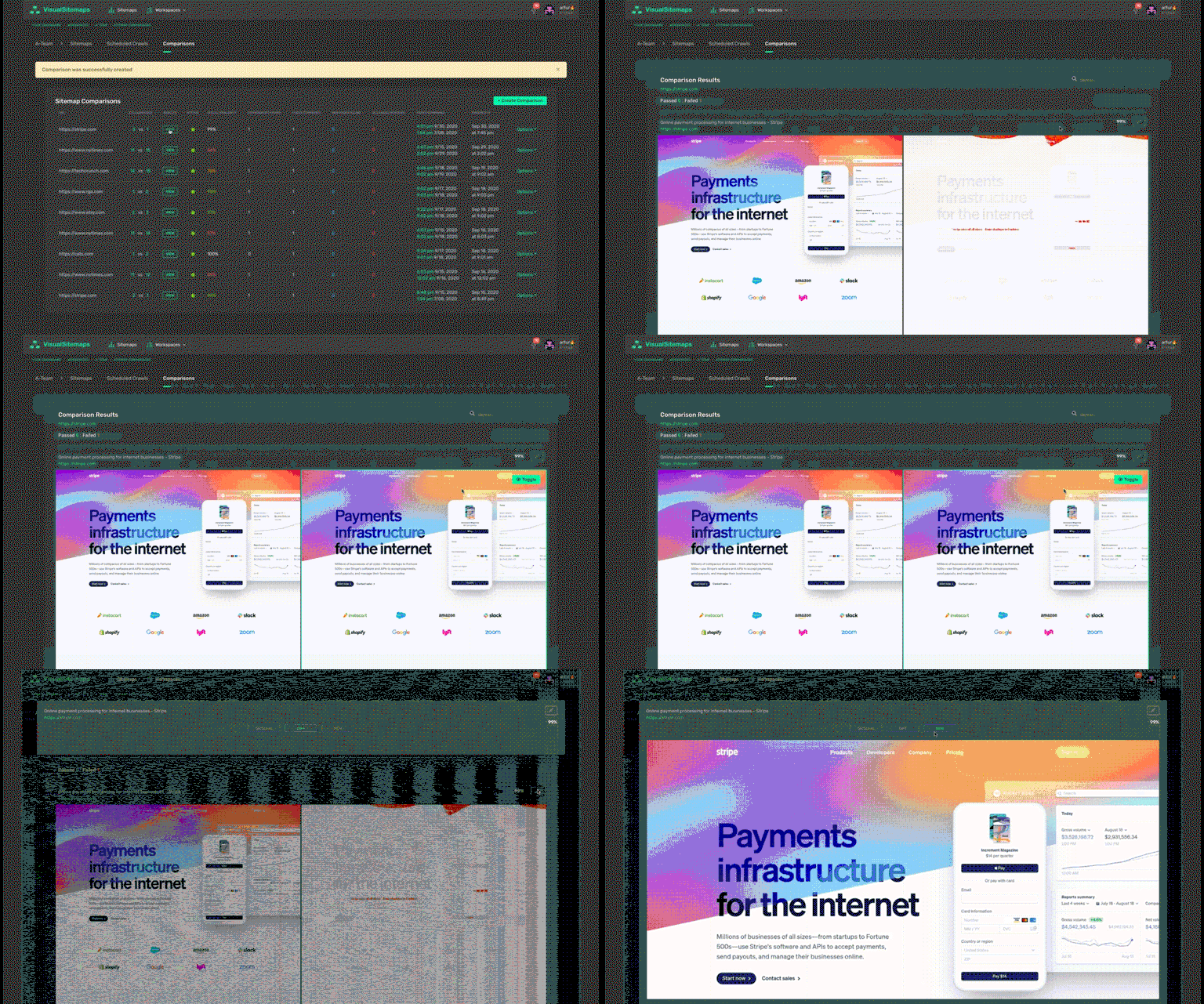
Compare your site structure to current industry standards to identify missing elements. Identify areas of weak surface coverage and untapped SERP opportunity. Highlight pages that need expansion, consolidation, or restructuring. Know what to build next and how to fill competitive gaps—without tedious manual audits
Visually plan site changes | VisualSitemaps
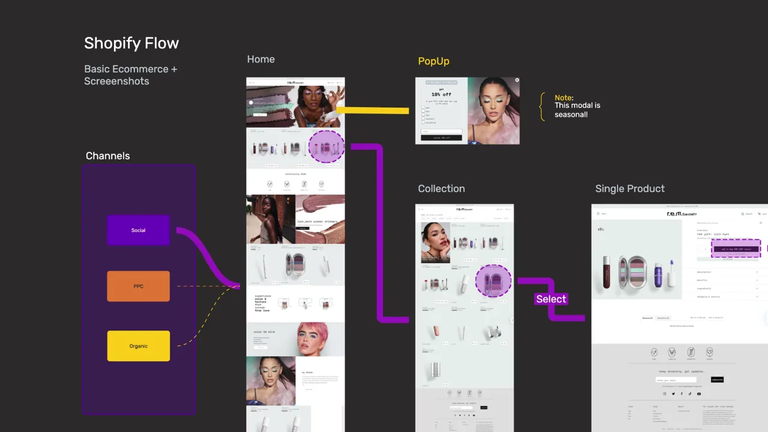
Transform complex websites into clear, interactive visual maps that you can edit, tag, and organize. Reorganize pages and content into meaningful sections for SEO planning and IA improvements, manually or through AI. Visually plan and prioritize site changes without relying on multiple complex spreadsheets and documents.
Pros:
Easy to Understand: Visual sitemaps turn complex website structures into simple diagrams, which are easier to understand.
Identifies Issues: AI can automatically detect issues like broken links, poor navigation, or duplicate content, which might be hard to spot manually.
Saves Time: Instead of manually mapping out your website, AI can quickly generate a visual sitemap, saving you a lot of time.
Improves SEO: A well-structured site helps search engines crawl and index your pages better, leading to better SEO performance.
Improves User Experience: By organizing your site more logically, users can find information more easily, which improves their experience on the site.
Cons:
Can Be Overwhelming: For very large websites, the visual sitemap can become too complex and hard to manage.
May Need Manual Adjustment: While AI can find issues, it might not always suggest the best solution, so you may still need to make manual adjustments.
Cost: Some AI-powered sitemap tools can be expensive, especially for small businesses or personal websites.
Dependence on Tool Accuracy: The AI’s suggestions might not always be 100% accurate, and you might need to double-check the insights.
Learning Curve: If you’re not familiar with sitemaps or website structure, there could be a bit of a learning curve in understanding how to use these tools effectively.




 Vidiq Pro Group Buy 3$ | VidiQ Boost | Boost Your Views And Subscribers On YouTube
  US Dollor
 Bangladeshi Tk